The Unexpected Link Between Casino Chip Materials and Long-Term Durability in Home Gaming Tables
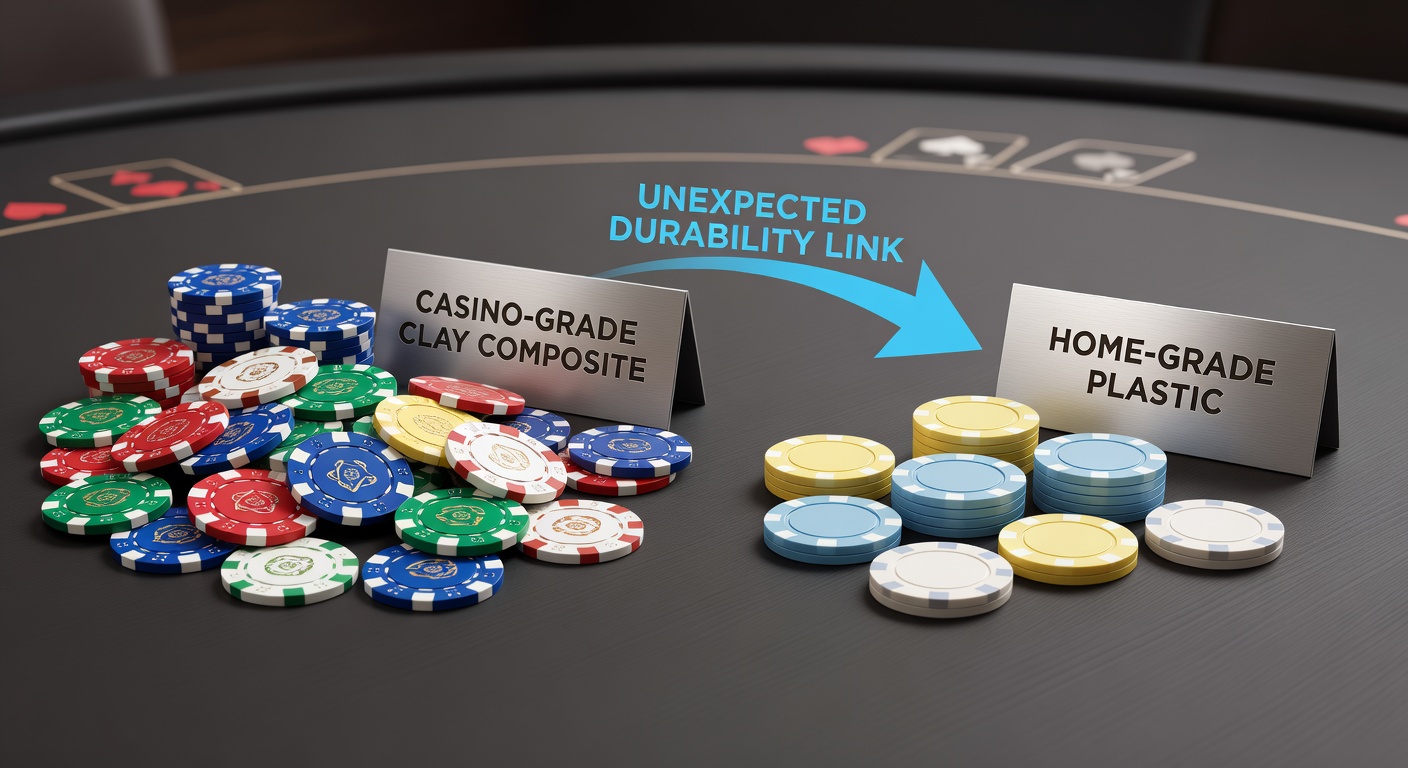
Materials used in casino chips determine how well they hold up when players bring them to home gaming tables, and researchers continue to examine the connections between composition, edge construction, and surface interaction. Data from materials testing labs show that clay-based chips often maintain structural integrity longer than injection-molded plastic versions under repeated handling and stacking, yet both types respond differently when placed on felt or wood surfaces common in residential setups.
Primary Chip Compositions and Their Properties
Manufacturers produce casino chips through several established methods, with compression-molded clay remaining a standard choice for professional environments while plastic and ceramic options gain traction for custom home collections. Clay chips typically incorporate a mix of calcium carbonate, clay powder, and resin binders that create a dense core, and this formulation resists cracking during extended play sessions according to industry production reports. Plastic chips, by contrast, rely on ABS or polycarbonate resins formed under high pressure, which allows for vibrant colors and custom inlays but leads to faster surface abrasion when chips slide across textured table felt.
Observers note that ceramic chips combine elements of both approaches through a firing process that yields a smooth, heavy feel, and these pieces often show minimal edge wear after thousands of shuffles in controlled durability trials. The weight distribution within each chip type also plays a direct role in how forces transfer to the table surface during bets and pushes, with heavier clay versions distributing pressure more evenly across home gaming felt.
Interaction Between Chips and Home Table Surfaces
Home gaming tables frequently feature wool-blend felt or synthetic surfaces that differ from the high-traffic casino layouts, and these variations influence how chip edges and bottoms degrade over months of use. Studies conducted by independent testing facilities reveal that clay chips create less visible pilling on felt because their slightly porous texture grips rather than scrapes, whereas smoother plastic chips tend to generate micro-abrasions that accumulate into noticeable wear patterns within six to twelve months of regular play.
Those who maintain home setups report that ceramic chips strike a balance by resisting both chipping and surface marking, yet their higher density requires tables with reinforced frames to prevent warping under stacked weight. In May 2026, updated guidelines from the Nevada Gaming Control Board highlighted material specifications that manufacturers now reference when producing chips for residential markets, emphasizing edge rounding techniques that reduce felt damage regardless of core composition.

Long-Term Durability Factors and Maintenance Practices
Long-term performance depends on factors such as humidity exposure, cleaning frequency, and storage methods, all of which interact with the original material makeup. Research from the Australian Institute of Gaming Technology indicates that clay chips retain their original diameter and thickness more consistently after two years of intermittent home use when stored in climate-controlled conditions, while plastic chips exhibit greater expansion and contraction cycles that eventually loosen printed denominations.
Table owners who apply protective sprays to felt surfaces extend the lifespan of all chip types, but the benefits appear most pronounced with ceramic pieces that already resist moisture absorption. Edge designs featuring metal inserts or reinforced rims further improve outcomes, and these features appear more frequently in chips marketed specifically for home tables rather than casino surplus stock.
Standards and Testing Protocols
Industry organizations establish benchmarks for chip hardness and impact resistance that help predict behavior outside professional settings. The European Casino Association publishes periodic summaries of standardized drop tests and abrasion cycles, and these results demonstrate clear differences in how each material category performs after simulated years of handling. Home users who select chips meeting or exceeding these benchmarks encounter fewer replacement needs, particularly when tables receive daily rather than occasional use.
Additional variables include the type of underlayment beneath the playing surface and the presence of rail padding, both of which cushion chips during aggressive bets and reduce stress fractures in clay and ceramic models alike. Data collected across multiple regions continues to refine recommendations for matching specific chip materials to particular table constructions.
Conclusion
Selection of casino chip materials directly shapes how long home gaming tables remain in optimal condition, and available evidence points to measurable differences across clay, plastic, and ceramic options. Home enthusiasts who review production specifications and surface compatibility data before purchase achieve longer service life from both their chips and their tables. Ongoing research from regulatory and technical bodies supplies updated guidance that supports informed choices without requiring trial-and-error experimentation.